

Prompt Engineering for Beginners: Master the Art of Talking to AI in 2025
Learn everything about Prompt Engineering for Beginners — from basic concepts to advanced prompt writing strategies. Discover how to craft perfect prompts for ChatGPT, Bard, and other AI tools to generate accurate, human-like results in 2025.
Artificial Intelligence (AI) is transforming the way we work, create, and communicate — but only if we know how to talk to it. That’s where Prompt Engineering comes in. In this guide, we’ll simplify Prompt Engineering for Beginners, explaining how to write better prompts that help AI understand what you really mean.
By the end, you’ll know how to make ChatGPT, Gemini, or Claude produce exactly what you want — whether it’s a blog, image, idea, or code.
What is Prompt Engineering for Beginners?
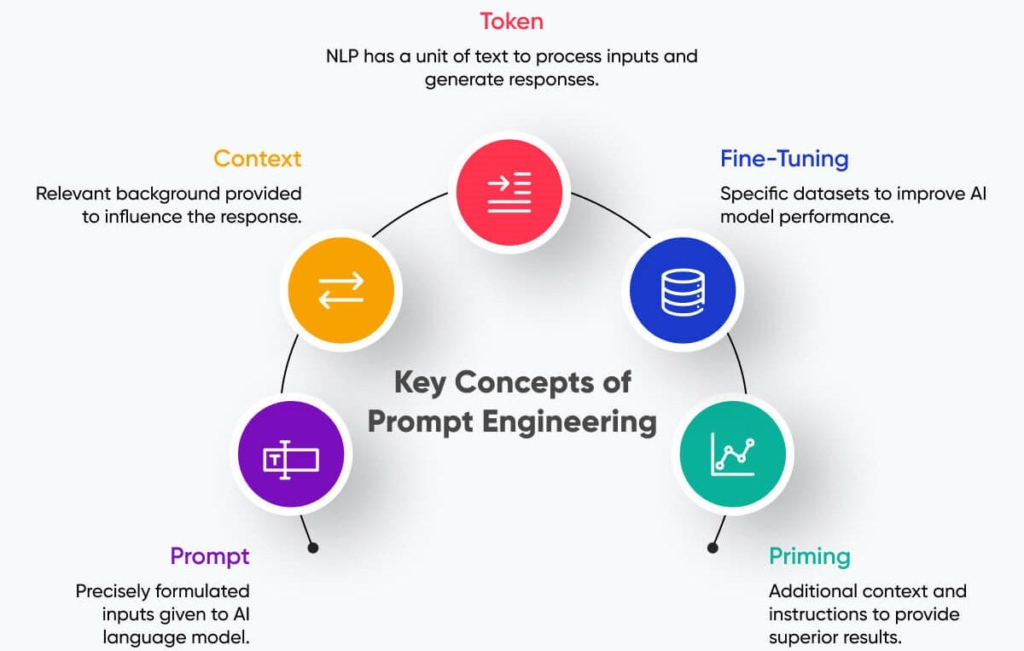
At its core, Prompt Engineering is the process of writing clear, structured, and specific inputs (prompts) that guide AI to deliver accurate and valuable outputs.
Think of it as giving clear directions to a smart assistant — the better your instruction, the better the result.
In Prompt Engineering for Beginners, you learn to:
- Understand how AI interprets your words.
- Frame prompts with purpose and precision.
- Use examples, tone, and constraints effectively.
Why Prompt Engineering for Beginners is Important in 2025
1. AI Is Everywhere
From chatbots to copywriting tools and coding assistants, AI is embedded in daily workflows. Knowing prompt engineering makes you more efficient and valuable in the digital world.
2. Boosts Productivity
A well-engineered prompt saves time and effort by reducing trial and error.
3. Opens Career Opportunities
Many companies are hiring Prompt Engineers who can train and guide AI tools — a skill now in high demand.
How AI Understands Prompts

The Science Behind Prompt Engineering for Beginners
AI models like ChatGPT or Claude are trained on massive text data. They predict the next most likely word based on your input. When you structure your prompt clearly, you help the AI make more accurate predictions.
Example of a Poor Prompt
“Write something about dogs.”
Example of an Effective Prompt
“Write a 100-word introduction about why dogs make great pets. Use a friendly tone and include one emotional sentence.”
See the difference? The second example gives context, goal, and tone, which is exactly what AI needs to perform better.
Core Principles of Prompt Engineering for Beginners

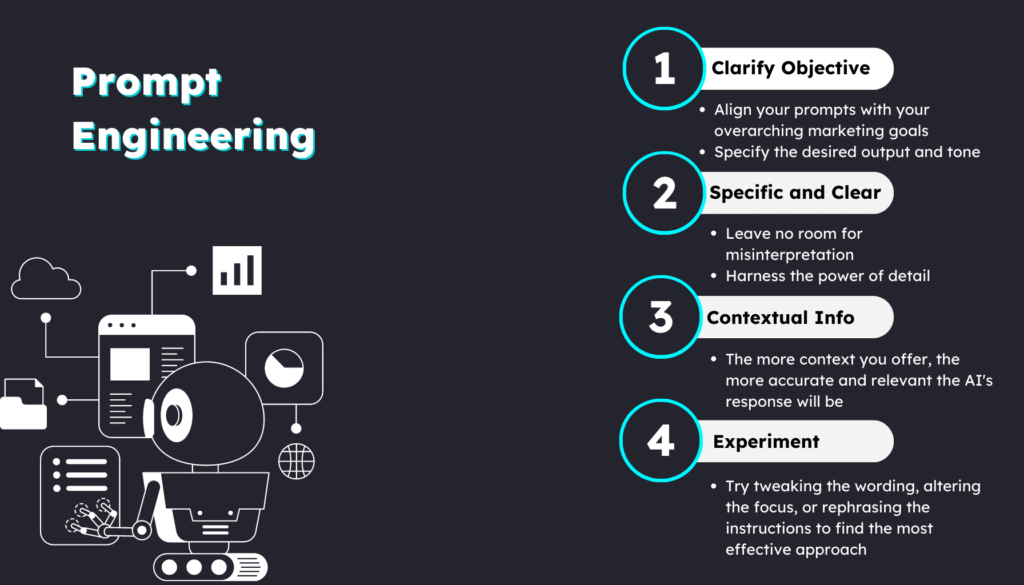
1. Clarity is Key
Be specific about what you want. Use simple language and avoid vague terms.
2. Context Creates Meaning
Provide background information or goals to help AI understand your intent.
3. Structure Matters
Break your prompt into steps or bullet points for complex requests.
4. Test and Refine
AI may not get it perfect the first time. Adjust your wording and try again.
Step-by-Step Guide to Prompt Engineering for Beginners
Step 1 — Define the Goal
Decide what you want the AI to do — write, summarize, analyze, or generate.
Step 2 — Add Context
Tell the AI who it’s writing for or the purpose. Example: “Write an Instagram caption for a health brand targeting young adults.”
Step 3 — Specify the Format
Mention output type — blog, table, code snippet, or list.
Step 4 — Add Constraints
Define word limits, tone, or style (e.g., “Write in 200 words, friendly tone”).
Step 5 — Review and Edit
Always check the output for accuracy and tweak your prompt if needed.
Types of Prompts in Prompt Engineering for Beginners
1. Instruction-Based Prompts
Direct the AI with a clear command: “Explain SEO in simple words.”
2. Role-Based Prompts
Assign a role to AI: “Act as a digital marketing expert.”
3. Example-Based Prompts
Provide samples for better results:
“Here’s an example of a headline I like. Write 3 similar ones.”
4. Chain-of-Thought Prompts
Encourage AI to think step by step:
“Explain your reasoning before giving the final answer.”
Common Mistakes in Prompt Engineering for Beginners
- Being too vague — Avoid open-ended instructions like “Tell me something about technology.”
- Ignoring tone — Specify if you want the text to sound formal, friendly, or persuasive.
- Not testing — Always refine your prompts after reviewing the results.
- Overcomplicating — Simple prompts often yield clearer results.
Advanced Tips for Prompt Engineering for Beginners
Leverage Keywords
In Prompt Engineering for Beginners, keywords guide the AI’s focus. Example:
“Write an SEO-friendly article about renewable energy with keywords: solar panels, green tech, sustainability.”
Use Variables
Add placeholders like {topic} or {tone} for dynamic prompt reuse.
Combine Prompts
Chain smaller prompts to create long-form content efficiently.
Reference Data or URLs
You can provide text or URLs for AI to analyze (if supported by your tool).
Prompt Engineering for Different AI Tools
ChatGPT
Best for conversational, content, and code generation. Use structured prompts.
Google Gemini
Excels at factual accuracy and summarization.
Claude
Ideal for reasoning, analysis, and long-context tasks.
Midjourney and DALL·E
Used for image generation. Prompts here must describe visuals, mood, and composition.
Examples of Powerful Prompts
- “Write a LinkedIn post about AI jobs using a confident and motivational tone.”
- “Create a 10-step checklist for starting an online business.”
- “Summarize the benefits of green energy in 150 words.”
- “Act as a travel expert. Suggest 3 offbeat destinations in Asia with a reason for each.”
Each example uses structure, role, and context — the three pillars of Prompt Engineering for Beginners.
Prompt Engineering and SEO
Prompt engineering helps marketers create better SEO content. With AI tools like ChatGPT, you can generate:
- Keyword-rich articles.
- Meta descriptions.
- FAQs and blog outlines.
The trick is to instruct the AI to include focus keywords naturally.
The Future of Prompt Engineering
In 2025 and beyond, prompt engineering will evolve into AI Collaboration Engineering — humans and AI co-creating ideas, stories, and strategies. The more precise we get, the smarter AI becomes.
Expect tools that automatically suggest improved prompts or learn your writing style over time.
Conclusion: Why Learn Prompt Engineering for Beginners
Learning Prompt Engineering for Beginners is not just about using AI — it’s about communicating with it effectively. Whether you’re a student, marketer, or entrepreneur, mastering prompts helps you save time, boost creativity, and produce higher-quality output.
Start small, experiment daily, and soon you’ll be crafting prompts like a pro.
FAQs About Prompt Engineering for Beginners
1. What is the easiest way to start prompt engineering?
Start by giving simple, clear commands to AI tools and observe how small changes affect results.
2. Do I need coding skills for prompt engineering?
No. It’s more about communication and logic than programming.
3. What are the best tools to practice prompt engineering?
ChatGPT, Google Gemini, Claude, Midjourney, and DALL·E.
4. How can prompt engineering help in content creation?
It lets you create better blogs, scripts, ads, and designs faster by giving AI precise instructions.
5. Is prompt engineering a good career in 2025?
Yes — many companies now hire AI Prompt Engineers to train and optimize AI workflows.


Votre guide parifoot rd congo: picks quotidiens, cotes comparees, tickets securises, gestion de mise, cash-out et promos. Depots via mobile money, retraits rapides, support francophone. LINAFOOT, CAF, ligues europeennes. Pariez avec moderation.
text chat online best free chat rooms
казіно з бонусами казіно з бонусами
I don’t think the title of your article matches the content lol. Just kidding, mainly because I had some doubts after reading the article. https://www.binance.info/en/register?ref=JHQQKNKN
Thanks for sharing. I read many of your blog posts, cool, your blog is very good.