Open Source Software for Startups: A Founder’s Guide

Discover why open source software for startups offers cost savings, freedom from vendor lock-in, customization and community benefits. Learn how to evaluate, adopt and manage open source tools for your startup.
In today’s fast-moving startup ecosystem, leveraging open source software for startups has become not just an option but a strategic imperative. For new companies operating on tight budgets, needing agility, and building products under constraints, open source software (OSS) can provide major advantages: cost savings, flexibility, customization, strong community support and faster time-to-market.
In this guide, we’ll walk you through what open source software for startups really means, why it matters, how to pick the right tools, how to adopt them effectively, what risks to watch out for, and what the future holds. Startup founders and tech leads alike can use this as a roadmap to leverage OSS smartly.
Table of Contents
- What Is Open Source Software for Startups?
- Why Open Source Software for Startups Matters
- Key Benefits of Open Source Software for Startups
- How to Choose the Right Open Source Tools for Your Startup
- Adoption & Implementation Best Practices for Open Source Software for Startups
- Managing Risks & Challenges with Open Source Software for Startups
- Cost-Considerations & Total Cost of Ownership (TCO)
- Success Stories & Case Studies in Open Source Software for Startups
- The Future of Open Source Software for Startups
- Summary & Actionable Checklist
- FAQs
1. What Is Open Source Software for Startups?
When we talk about open source software for startups, we mean software whose source code is freely available, modifiable, and distributable under open-source licenses (such as MIT, Apache, GPL, etc.). Startups can use, customise and build on these tools rather than relying solely on proprietary, closed-source solutions.
Startups adopt open source software for core infrastructure (databases, web servers), development frameworks, productivity tools, analytics, and many other functions. Because startups often must move quickly, iterate frequently, and pivot based on market feedback, open source software offers an environment of adaptability and lower upfront cost.
As noted, in India for example many startups have embraced open source technologies extensively — from languages to infrastructure tools. mint
Globally, open source is recognised for offering independence from vendors, faster innovation and lower total cost of ownership. pimcore.com+1
2. Why Open Source Software for Startups Matters

2.1 Cost-Efficiency from Day One
For startups that may have limited budgets and high burn-rate pressure, the elimination or reduction of licensing fees makes a big difference. Open source software often has no licensing cost or flexible licensing models, allowing teams to allocate funds toward growth, product development and marketing rather than hefty software bills. StudioLabs+1
2.2 Flexibility, Customisation & Speed
Startups need to adapt and pivot. Open source software gives you access to the code, which means you’re not locked into someone else’s roadmap. You can tailor tools to your needs, integrate them deeply and build differentiating features quickly. devpals.co.uk+1
2.3 Community & Ecosystem Support
Open source tools benefit from vibrant communities, which means faster innovation, many available plugins or modules, peer-support, and less dependence on a single vendor’s roadmap or pricing ramp. developers.dev
2.4 Avoiding Vendor Lock-in
Using proprietary tools often means you become tied to one vendor’s ecosystem, pricing, and upgrade path. With open source, you have greater control—less dependence—and you can migrate or adapt as your startup scales. pimcore.com
2.5 Scalability & Sustainability
Many open source tools scale well, especially if you or your engineering team have the expertise. As your startup grows, you can extend or modify the tools rather than being constrained by usage tiers or license restrictions. devpals.co.uk
3. Key Benefits of Open Source Software for Startups
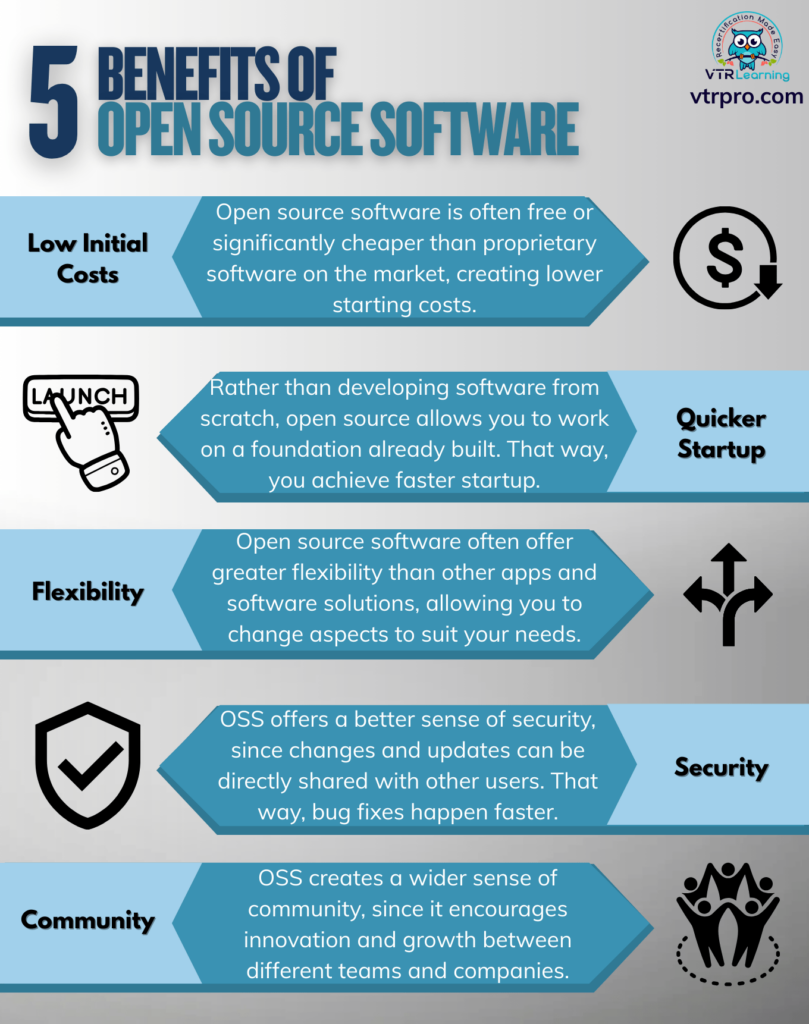
Let’s dive deeper into specific benefits of open source software for startups:
3.1 Lower Up-Front Costs & Reduced TCO
By eliminating license fees and often supporting older hardware or lower infrastructure cost, open source allows startups to get their MVPs (Minimum Viable Products) out quickly. Over time, you’ll also save on upgrade costs and expensive vendor-side professional services. TiDB+1
3.2 Faster Time to Market
With access to existing libraries, frameworks, modules and community contributions, engineers can build faster without reinventing everything. This means startups can iterate, test, pivot and release more quickly. devpals.co.uk
3.3 Greater Control & Tailored Experiences
Given full access to code, startups can customise user-flows, integrate with unique internal services, adapt features for niche markets, and differentiate. You’re not forced into standard vendor workflows or pay extra for each customisation. MHTECHIN
3.4 Innovation & Competitive Edge
Because you’re free to experiment, you can use open source to build on emerging tech quickly (AI/ML frameworks, IoT stacks, analytics engines), giving you a head-start versus competitors who are locked into legacy vendor systems. MoldStud
3.5 Community-Driven Quality & Security
Open source projects often benefit from transparency and many eyeballs—security issues can be flagged and patched quickly. The collaborative nature of development enhances reliability. Sandego
4. How to Choose the Right Open Source Tools for Your Startup

Choosing the right open source software for startups is critical. It’s not only about cost but about alignment with your business model, team skills, future plans and risk appetite. Here are key considerations:
4.1 Define Your Needs & Use-Cases
Before picking tools, outline what you actually need: Is it a web framework, database, analytics platform, CI/CD tool, infrastructure automation? What are your present requirements vs what you may need two years down the line?
4.2 Assess Community & Maintenance
- Is the project active (regular commits, recent releases)?
- Are there many contributors? Are issues being resolved?
- Is there a strong community (forums, Slack/Discord, mailing lists) you can rely on?
A vibrant project means fewer risks of abandonment.
4.3 License & Legal Considerations
Open source licenses vary (MIT, Apache, GPL, LGPL, etc). Some come with obligations especially if you modify or distribute the software. Make sure you understand licensing, especially if you build a service or product on top of OSS and plan to commercialise.
“Strictly speaking it would depend on what the actual license says…” Reddit
4.4 Integration & Compatibility
Ensure the open source tool integrates well with your tech stack, existing infrastructure, future ecosystems (cloud vendor, micro-services, APIs). Also consider vendor neutrality so you’re not locked into one ecosystem even though you’re using OSS.
4.5 Support & Documentation
Check the quality of documentation, tutorials, install guides, forum answers. Startups often don’t have time for steep learning curves. Good docs + active community support lighten the load.
4.6 Scalability & Performance
Some open source solutions are great for small scale but may struggle when scaled. Check benchmarks, real-world usage, and how much customisation may be needed to scale.
4.7 Risk Management & Sustainability
Consider risks of using open source: security vulnerabilities, need for internal maintenance, potential for project abandonment. Also plan for long-term support (LTS versions, enterprise forks, vendor support options).
5. Adoption & Implementation Best Practices for Open Source Software for Startups

Having chosen your tools, how do you adopt them in a way that leverages all the benefits? Here are best practices:
5.1 Start with MVP mindset & Gradual Adoption
Don’t try to rewrite everything at once using open source. Pick a core area (e.g., your backend framework) and gradually adopt OSS across stack. This gives your team time to learn and integrate.
5.2 Build an Internal Governance Framework
- Maintain a list of approved open source tools & licenses.
- Define policies for how your startup uses, modifies, and distributes OSS.
- Track usage of OSS libraries and their dependencies (common risk: unknown dependencies lead to vulnerabilities). arXiv
5.3 Contribute Back (where possible)
Even small contributions (bug reports, documentation fixes) help build relationships with the community and can improve your internal reputation, as well as giving you direct influence on the tool’s roadmap.
For example: “99% companies use open source, but never contribute.” Reddit
5.4 Secure & Maintain Your OSS Stack
- Keep OSS tools updated, patch vulnerabilities quickly.
- Use dependency scanning tools to identify insecure libraries.
- Understand the license obligations if you distribute software containing OSS.
- If needed, consider enterprise support or backup plan for mission-critical OSS.
5.5 Monitor Performance & Cost of Ownership
Even though OSS may be free to acquire, you still have costs: infrastructure, dev time, support, training. Monitor the actual cost of running the tools. Balance benefits versus hidden costs.
5.6 Documentation & Internal Training
Ensure your engineering team understands the OSS stack, knows troubleshooting workflows, and has clear documentation. Use onboarding sessions, internal wiki, peer training.
5.7 Plan for Scale & Future Migration
From the beginning, plan for how your OSS tools will scale with you. Understand upgrade paths, community support lifecycles, alternative solutions if the tool becomes unsupported.
6. Managing Risks & Challenges with Open Source Software for Startups
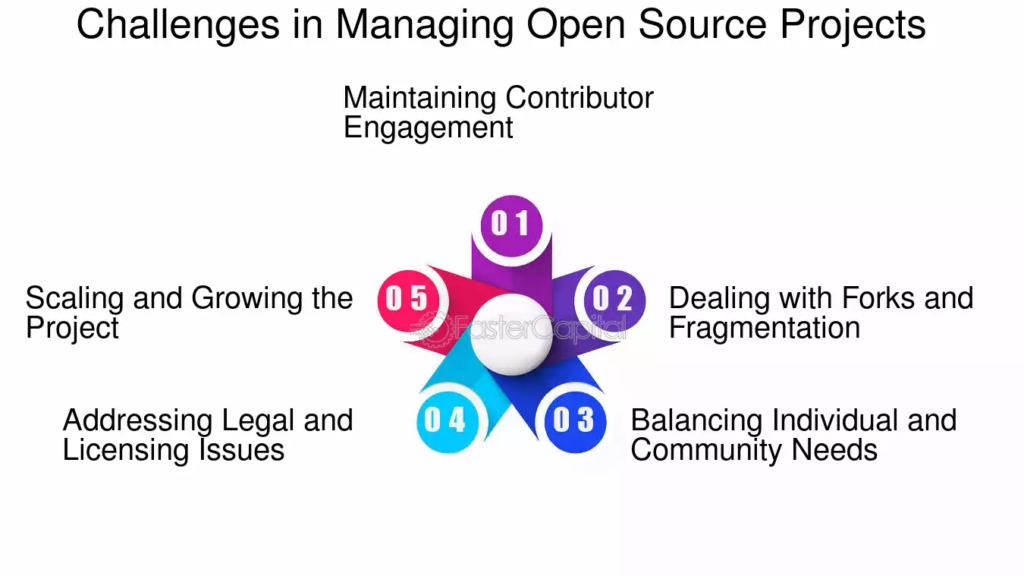
Open source software is powerful, but it’s not without challenges. Being aware of potential pitfalls helps you mitigate them.
6.1 Security & Vulnerabilities
While open code can mean many eyes on it, it also means that vulnerabilities are visible to attackers. Startups must proactively manage OSS security. arXiv
6.2 License Compliance & Legal Risk
If you modify/open-source your product, or distribute binaries, you must understand licence terms (e.g., GPL requires you to open code in some cases). Failure to comply can lead to legal issues.
6.3 Hidden Maintenance Costs
Even though there is no license fee, maintaining, customizing and extending OSS takes engineering time. If your team spends too much time on infrastructure rather than product, you risk diverting focus.
6.4 Fragmentation & Project Abandonment
Some OSS projects become stale or dormant. If your startup depends on such a tool, you may face migration risk. Always assess project health.
6.5 Integration Complexity
Open source stacks often involve multiple components, some loosely integrated. Managing these can become complex, especially for small teams lacking ops expertise.
6.6 Support & Expertise
Commercial software often includes dedicated support. With OSS you may rely on community support, which may be variable. You might need to hire specialists or pay for enterprise support.
7. Cost-Considerations & Total Cost of Ownership (TCO)
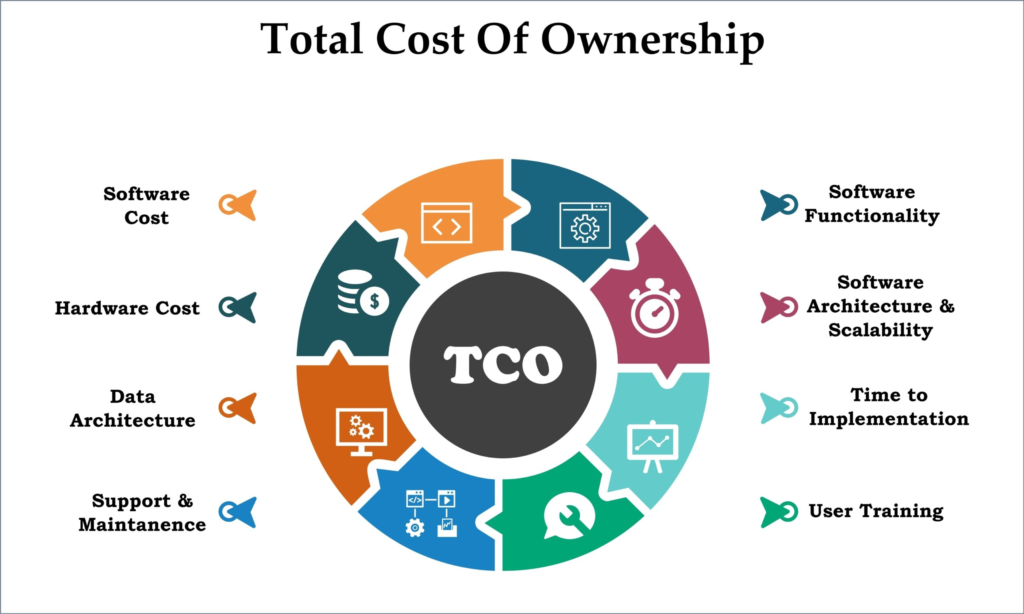
Even though open source software is free to acquire, you should evaluate the full cost and ROI when using it for startups.
7.1 Upfront Costs
- Infrastructure (servers, cloud) to host the OSS.
- Time to install, configure, customize.
- Training engineering team on the tool.
7.2 Ongoing Costs
- Maintenance and upgrades.
- Patching security fixes.
- Monitoring performance and logging.
- Documentation and team support.
- Potential paid enterprise support (if needed).
7.3 Cost Savings
- No or low licensing fees.
- Avoid vendor lock-in and high upgrade costs.
- Faster development means faster time-to-market and potentially faster growth.
7.4 Calculating ROI
Consider: If open source lets you launch your MVP 3 months faster, or avoid $X in licensing costs per year, that money can go into product, marketing, hiring. The key is to track savings and how they translate into business growth.
8. Success Stories & Case Studies in Open Source Software for Startups

8.1 Indian Startup Environment
In India, many startups extensively use open source tools across their development stack. For example, the B2B marketplace Udaan uses “open source extensively, right from the programming languages to code version control and monitoring tools.” mint
Another Indian startup, Zetwerk, uses JavaScript-based open source technologies to power complex manufacturing workflows. mint
8.2 Global Examples
Open source software has long helped companies avoid licensing burdens and pivot quickly.
For example: The article “Open Source for Startups: Lower Costs, Higher Growth” emphasises open source giving flexibility, community collaboration, faster innovation for growth. StudioLabs
9. The Future of Open Source Software for Startups
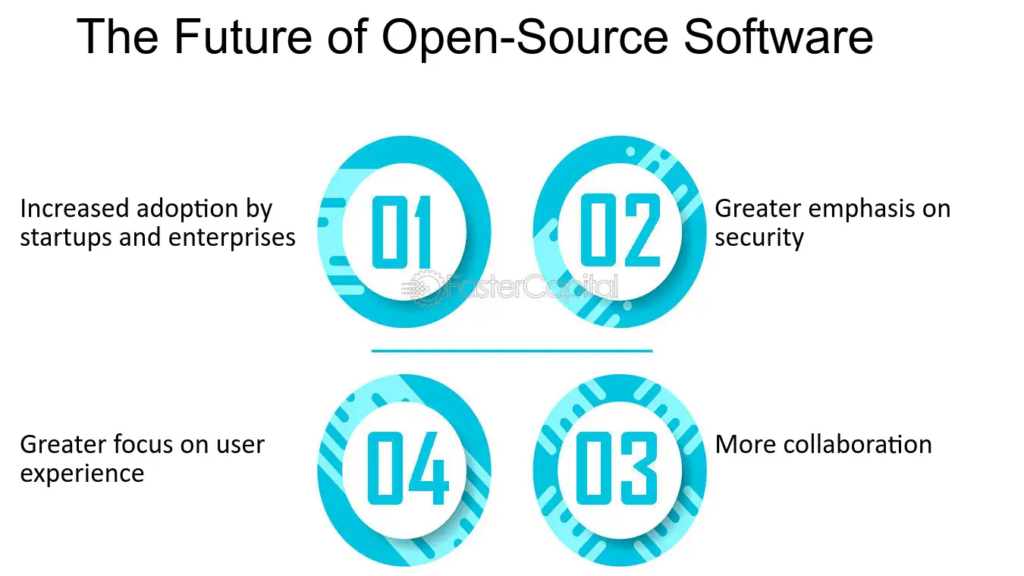
9.1 Increased Adoption in New Verticals
As more industries digitalise (health, education, logistics), startups will lean into OSS stacks because they need rapid productisation, lower cost and ability to customise.
9.2 More Hybrid/Enterprise-Grade Open Source
Many OSS projects now offer enterprise versions or support models—this will give startups flexibility to start free and scale into paid support when needed.
9.3 Open Source + Emerging Tech (AI, IoT, Blockchain)
Open source frameworks for AI, IoT, blockchain are growing rapidly. Startups will use OSS to experiment and build prototypes quickly. MoldStud
9.4 Governance, Security & Sustainability Focus
As OSS becomes foundational, governance around OSS usage, security scanning, license compliance and sustainability of open source projects will become more important. arXiv
9.5 Business Models around Open Source
Startups themselves may adopt open source as part of their business model—offering managed services, customisations, enterprise versions, open core models.
10. Summary & Actionable Checklist
Summary
- Open source software for startups offers major advantages: cost-efficiency, flexibility, community, innovation, vendor independence.
- But it also comes with responsibilities: licensing compliance, maintenance, integration, security.
- Choosing the right tools and implementing them smartly can give startups a competitive edge.
- Align your OSS strategy with your business strategy: support rapid iteration, lean operations, scale when ready.
Actionable Checklist
- Audit your current software stack: what proprietary tools can be replaced with OSS?
- Define key business and technical requirements for your startup (scalability, customization, community support).
- Research open source tools (check community health, licensing, support).
- Create an internal OSS governance policy: licensing, updates, usage, contributions.
- Start with one or two core OSS components and integrate gradually.
- Train your engineering team on chosen tools; document usage and best practices.
- Monitor performance, maintenance cost, time-to-market improvements from OSS adoption.
- Contribute back to OSS community where feasible (bug fixes, documentation) to build relationships and reputation.
- Keep security and license compliance monitoring ongoing.
- Plan for upgrade, scale and potential migration paths early.
11. FAQs
Q1. What does “open source software for startups” mean?
It refers to software with source code publicly available under open-source licenses, which startups can use, modify and distribute — enabling them to build and scale their products without being locked into expensive proprietary tooling.
Q2. Is open source software always free?
Not necessarily. While many OSS tools have no licensing cost for the software itself, you may incur costs in infrastructure, customization, maintenance or paid support. The “free” refers to freedom and cost of licensing — not zero cost overall.
Q3. Are there risks using open source software for startups?
Yes. Risks include security vulnerabilities, license non-compliance, project abandonment, hidden maintenance cost, integration complexity. But with proper governance and strategy, these can be mitigated.
Q4. How do I pick the right open source tool for my startup?
Evaluate your startup’s needs, check the project health (community, maintenance, activity), ensure license compatibility, confirm integration with your stack, verify scalability, and consider support options.
Q5. Should my startup contribute back to the open source community?
Yes — contributing helps build trust, gives you influence over the roadmap of tools you rely on, and strengthens relationships with the community. Even small contributions matter.