

5G Impact on Mobile Apps – What Developers & Users Should Know
Explore the 5G impact on mobile apps — how faster speed, low latency, and new capabilities are reshaping apps across gaming, AR/VR, IoT, and more.
5G is more than just “faster mobile internet.” The 5G impact on mobile apps spans how apps are built, how they perform, what features are possible, and what challenges developers and users will face. In this article, we’ll dive into:
- Key technical improvements brought by 5G
- How mobile apps will evolve because of 5G
- Sectors/app types most affected
- Challenges & risks
- Best practices for developers to leverage 5G
- Future trends for mobile apps in the 5G era
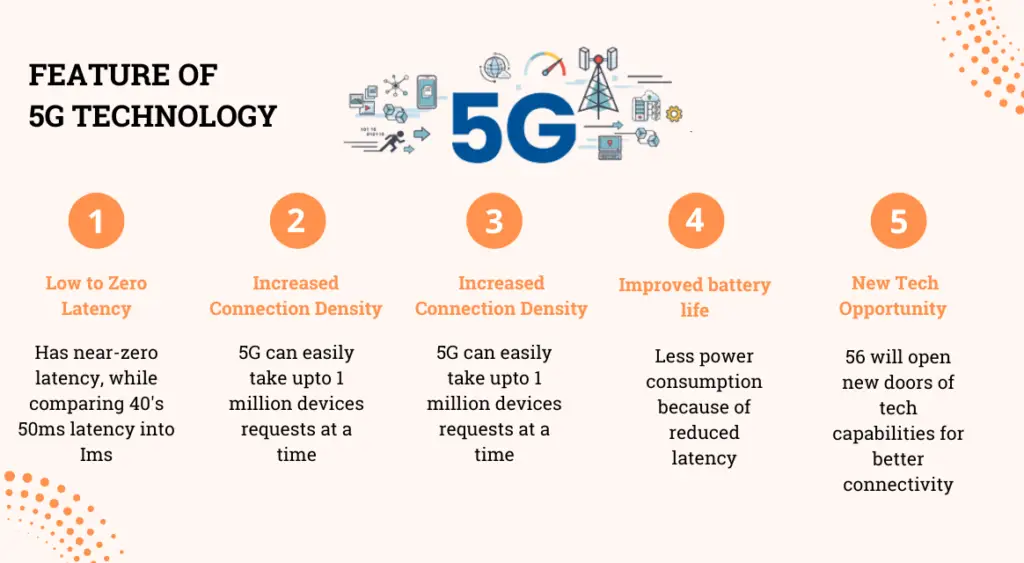
Key Technical Advantages of 5G Impact on Mobile Apps
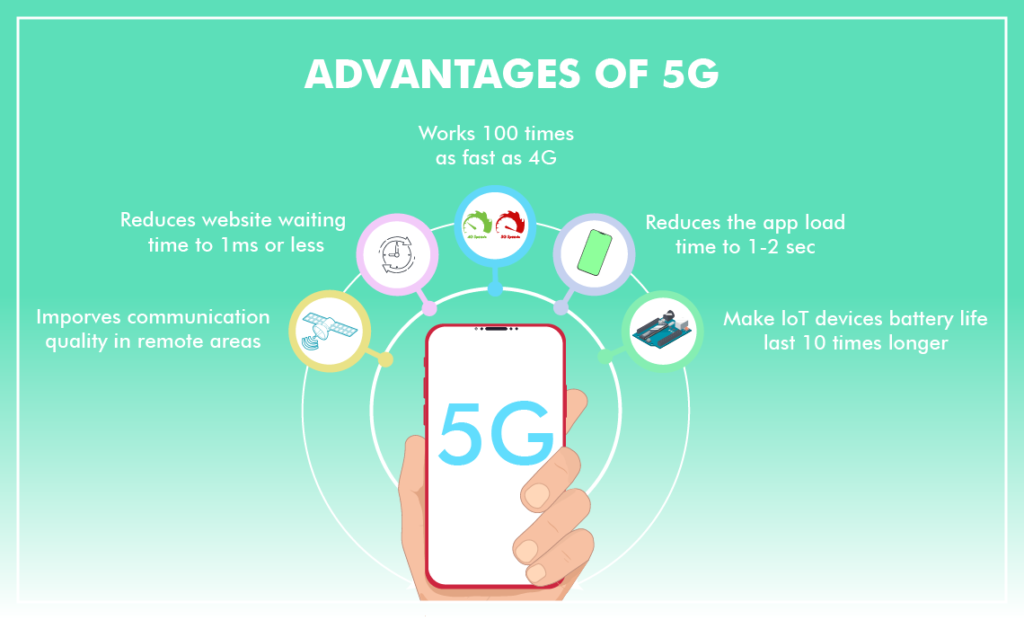
To understand the 5G impact on mobile apps, we first need to look at what 5G brings technically.
Dramatic Increase in Speed & Throughput
- 5G delivers peak data speeds many times higher than 4G — speeds up to 10 Gbps in some settings. Differ+2EDUCBA+2
- This allows mobile apps to handle large data transfers far more smoothly (HD/4K/8K video, large downloads, high-res assets) without lag. debutinfotech.com+1
Ultra-Low Latency
- Latency with 5G can fall to as low as ~1 millisecond, especially in ideal/micro-cell setups. squareinfosoft.com+2Business of Apps+2
- This has big consequences for real-time applications: multiplayer gaming, video conferencing, AR/VR, remote control, etc. squareinfosoft.com+2GeeksforGeeks+2
Massive Device Connectivity & Network Capacity
- 5G supports many more simultaneous device connections per square kilometer compared to 4G. This is especially important for IoT (Internet of Things). Differ+2Business of Apps+2
- Apps that depend on many connected sensors/devices – smart home, industrial IoT, wearables – will benefit. debutinfotech.com+1
Edge Computing & Cloud Integration
- With 5G’s fast round-trip times and improved network performance, pushing more compute to edge servers becomes feasible. EDUCBA+2anvicybernetics.com+2
- Mobile apps can offload heavy processing (e.g. AI inference, AR rendering) to servers closer to users, improving performance and lowering device hardware requirements. anvicybernetics.com+1
How the 5G Impact on Mobile Apps Will Change App Types & Use Cases
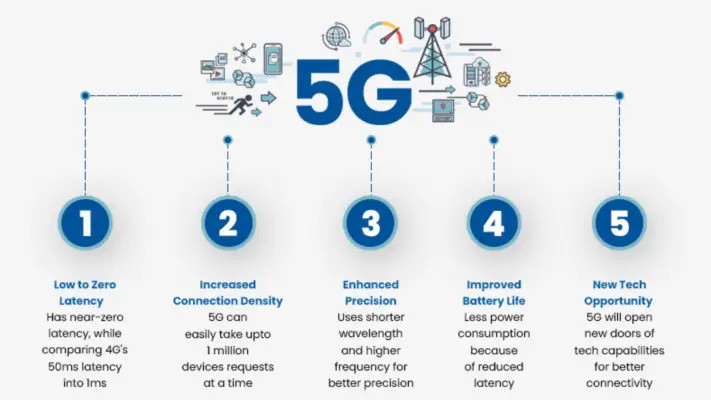
The technical improvements translate into changes in what mobile apps can do and how users will experience them.
AR / VR / Mixed Reality Apps
- Previously AR/VR was constrained by bandwidth and latency; 5G mitigates those limitations. Truegazette+2squareinfosoft.com+2
- More immersive experiences are now possible: smoother visuals, more realistic interactions, live environments. squareinfosoft.com+1
Cloud Gaming & Streaming Apps
- Streaming high resolution video (4K, 8K) with minimal buffering becomes more reliable. Differ+1
- Cloud gaming services (Xbox Cloud, Google Stadia-like, etc.) can deliver more responsive experiences due to reduced lag. squareinfosoft.com+1
IoT, Smart Home, and Wearables
- 5G enables more devices to be connected and exchanging data simultaneously. Differ+2debutinfotech.com+2
- Real-time data from health wearables, home sensors, industrial equipments can be processed more efficiently. anvicybernetics.com+1
Real-Time Communication & Collaboration Apps
- Video conferencing, live chat, remote assistance apps will feel more fluid, with less lag and better synchronization. GeeksforGeeks+1
- AR/VR collaboration, virtual meetings with spatial audio/video will improve.
High-Definition Media & Richer Content Apps
- Photo/video apps can allow uploading/downloading high resolution, editing via cloud, streaming AR filters or effects in real time. Differ+1
- More dynamic and interactive content (e.g. live interactive video, 3D content) becomes practical.
Challenges & Risks in 5G Impact on Mobile Apps
To fully leverage the 5G impact on mobile apps, developers must navigate certain challenges.
Device & Network Coverage Limitations
- Not all users have 5G-capable devices. Older phones still dominate many regions. Apps still need fallback plans for 4G/3G. Designveloper+1
- 5G infrastructure rollout is uneven. Rural or less developed regions may have weak or patchy 5G. Thus performance can vary. QSS Technosoft Inc.+1
Battery Consumption & Power Management
- High data rates, constant connectivity, continuous streaming or sensor usage may lead to higher battery drain. Developers need to optimize. Designveloper
Development Complexity & Cost
- Supporting 5G features (e.g. edge computing, real-time streaming, AR/VR) may require more complex app architecture, more testing, and higher development costs. Designveloper+1
- Ensuring backward compatibility, dealing with network transitions, and handling edge cases is extra work.
Security & Privacy Concerns
- More connected devices and more data transferred raises attack surface. Edge devices, IoT endpoints are often weak in security. MARSMATICS+1
- Data privacy concerns: location accuracy improved, real-time data streamed — data handling, consent, encryption, compliance matter more.
Cost of Data & Infrastructure
- High bandwidth data usage can translate to higher costs for users. Apps that stream or download a lot may incur user complaints or limit usage.
- Network providers may charge premium for high throughput or certain 5G network slices.
Best Practices to Leverage 5G Impact on Mobile Apps
To harness the full benefits of the 5G impact on mobile apps, developers and product teams should follow best practices.
Design for Hybrid Connectivity (5G + 4G fallback)
- Ensure the app gracefully degrades when 5G isn’t available (switching between modes, adjusting quality).
- Use adaptive streaming, dynamic asset loading to match network conditions.
Optimize for Latency & Responsiveness
- Minimize unnecessary network calls.
- Use edge servers or CDNs where possible.
- Cache data smartly.
Energy and Battery Efficiency
- Implement efficient protocols; avoid constant polling; batch network requests.
- Allow “low-power mode” on 5G apps where high performance is not required.
Security & Privacy by Design
- Encrypt data in transit.
- Secure APIs, authentication, ensure endpoints (especially IoT/edge) are safe.
- Follow privacy best practices for location, real-time data, user consent.
Use Edge Computing & Cloud Offloading
- Shift heavy compute tasks off device to cloud or edge servers.
- For AR/VR, AI inference, video processing, this helps reduce local resource usage and improves performance.
Modular & Scalable Architecture
- Build app parts modularly so you can add high performance modules as 5G adoption increases.
- Maintain backward compatibility.
Testing Under Real-World Conditions
- Test in varying network conditions (poor 5G, hand-off between cells, strength variation).
- Monitor performance, lag, battery, heat, etc.
Case Studies: 5G Impact on Mobile Apps in Action
Here are real or hypothetical examples showing how 5G is changing mobile app capabilities.
- AR shopping app: Using 5G, a retail app offers live AR try-on of clothes with high-res detail, reduced lag, and streaming of 3D models in real time.
- Cloud gaming platform: Players stream high-quality games to mobile devices, reduce buffering and control latency, making competitive mobile gaming smoother.
- Telemedicine / Remote surgery apps: Doctors use mobile apps / wearables to transmit patient data, video, or even remote assistance live, enabled by low latency and high reliability.
- Smart city apps: Real-time monitoring, traffic, public safety apps that respond instantly to sensor data (cameras, IoT), with millions of connected devices.
Future Trends in 5G Impact on Mobile Apps
What’s ahead as 5G evolves?
Standalone 5G & Network Slicing
- As networks shift to fully standalone 5G infrastructure (not relying on 4G core), more features like ultra-reliable low latency and customizable network slices (dedicated bandwidth for critical apps) will mature.
Growth of AR/VR, Metaverse & Immersive Apps
- Immersive apps will become more common, blending real & virtual in daily use. AR/VR training, education, entertainment more viable.
AI + Edge + 5G Combination
- AI inference at the edge: apps will leverage on-device + edge AI to deliver smart behavior (like translation, recognition) faster.
IoT Everywhere – Smart Environments
- Smart homes, wearables, industrial sensors, health monitoring will expand. Apps controlling many devices in real time or aggregating massive streams of data will become more common.
Enhanced Multimedia & Interactive Content
- High resolution video, live 3D streams, holographic or volumetric video (or similar) may become feasible.
Regulatory, Privacy & Ethical Focus
- With greater power comes greater responsibility: privacy regulation, data protection, securing edge / IoT devices, avoiding misuse.
FAQ: 5G Impact on Mobile Apps
Q1. What exactly does “5G impact on mobile apps” mean?
A: It means how features like increased speed, lower latency, and greater connectivity offered by 5G change what mobile apps can do, how they perform, what users expect, what development challenges appear, etc.
Q2. Will 5G make all mobile apps faster?
A: Not necessarily. Apps that depend heavily on network speed—streaming, real-time interaction, AR/VR, cloud gaming—will benefit most. Apps that work mostly offline or with small data transfers may see modest gains.
Q3. Do I need to build different version of app for 5G vs 4G?
A: You don’t always need entirely different versions, but apps should be smart: detect network speed, adapt quality (images/videos), adjust settings, fallback gracefully.
Q4. Are there more battery drain issues with 5G apps?
A: Yes, higher data throughput and continuous network activity can drain battery faster. That’s why optimization (efficient resource usage, edge/cloud offload, adaptive behavior) is crucial.
Q5. Is security more of a concern in 5G-enabled apps?
A: Yes. More devices, more connectivity, more real-time data flows —— all increase attack surface. Developers must follow strong security practices (encryption, authentication, secure endpoints, regular audits).
Q6. Will 5G be available everywhere soon, so I should build my app fully for 5G now?
A: It depends on your target market. In urban areas of many countries, 5G is expanding rapidly. But in many rural / developing regions, infrastructure is still catching up. It’s often safer to design for hybrid (5G + fallback).
Summary & Recommendations for Developers
To sum up, the 5G impact on mobile apps is transformative—offering new possibilities as well as challenges. Here are recommendations:
- Start by auditing your app’s network-intensive parts: Where would latency or speed improvements matter most?
- Implement adaptive designs: Quality levels, streaming rates, asset sizes based on network conditions.
- Leverage edge computing & cloud services where possible, to reduce load on devices.
- Optimize for power and battery usage: don’t let high performance kill the battery.
- Ensure security & privacy are baked in from the start.
- Test under real-world 5G conditions: higher speed, but also spotty coverage, handoffs, etc.
- Watch infrastructure trends: network slicing, standalone 5G, regulation—build future-proof where feasible.
Your article helped me a lot, is there any more related content? Thanks! https://accounts.binance.info/cs/register-person?ref=OMM3XK51
Your point of view caught my eye and was very interesting. Thanks. I have a question for you. https://www.binance.info/zh-TC/register?ref=DCKLL1YD
Your article helped me a lot, is there any more related content? Thanks!
Your point of view caught my eye and was very interesting. Thanks. I have a question for you.
Thanks for sharing. I read many of your blog posts, cool, your blog is very good. https://www.binance.info/register?ref=IHJUI7TF
Your article helped me a lot, is there any more related content? Thanks! https://accounts.binance.com/ru-UA/register-person?ref=JVDCDCK4