

AI Tools for Content Writing Free vs Paid – Understanding the Differences
Explore AI tools for content writing free vs paid versions—benefits, limitations, and how to pick the right one for your needs.
AI writing tools are everywhere now. Some are completely free (or freemium), while others require payments. Knowing the distinction between AI tools for content writing free vs paid can help you choose what works best for your writing goals, budget, and quality standards. In this article, we’ll cover:
- What free AI writing tools can offer
- What paid versions bring to the table
- Key trade-offs and limitations
- How to decide which version makes sense for you
- Popular tools in both categories
- Best practices for using AI in content writing
- Frequently asked questions
What Free AI Tools for Content Writing Free vs Paid Offer
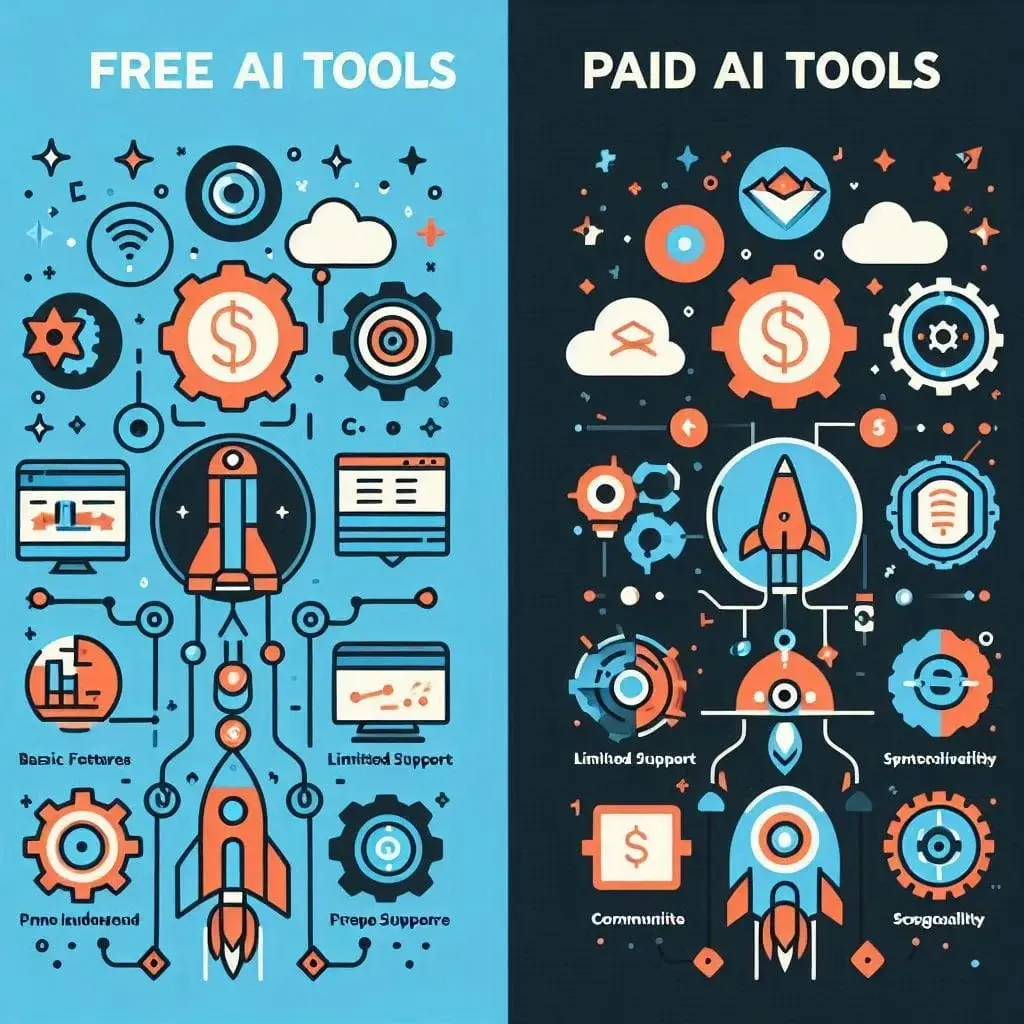
To understand the comparison, let’s first see what free tiers or free AI content writing tools tend to provide.
Typical Features in Free AI Tools
Free versions generally give you access to:
- Basic content generation (short blog intros, social media copy, product descriptions)
- A limited number of templates or writing styles blog.contlyai.com+2agilegrowthlabs.com+2
- Word or character limits per day or month Baveling+2blog.contlyai.com+2
- Basic grammar/spelling correction, maybe tone adjustments Smart AI Directory+1
- Free trial periods or “freemium” plans so you can test before paying pathtocontent.com+1
Advantages of Free Tools
Some of the benefits when you use AI tools for content writing free vs paid are:
- Zero or low cost, so risk is minimal if you’re learning or on a tight budget.
- Great for brainstorming, generating ideas, getting past writer’s block.
- Helps with short-form content or small tasks without needing high volume or premium polish.
- Allows you to test the tool’s UI/UX, speed, and style before upgrading.
Common Limitations of Free Tools
However, free tools also come with clear limitations:
- Usage caps on number of words, characters, or outputs per month/day. agilegrowthlabs.com+2blog.contlyai.com+2
- Access only to older or less powerful AI models. Paid tools often have more advanced models (better coherence, nuance). Baveling+2PanelsAI+2
- Fewer templates, limited control over tone, style, formatting, brand voice. junaidmk.com+1
- Basic or no SEO tools, plagiarism detection, team/collaboration features. Baveling+2agilegrowthlabs.com+2
- Slower responses or degraded performance under heavy load. Baveling+2Smart AI Directory+2
- Generic content: less tailored, more “generic-sounding”; more editing needed. yomu.ai+2blog.contlyai.com+2
What Paid Versions Bring: More Power, More Flexibility

When you go beyond free versions, what do paid AI tools for content writing typically offer?
Enhanced Content Quality and Model Power
- Access to newer and more capable AI models (e.g. versions with better understanding, less error) → more fluent and natural writing. PanelsAI+2agilegrowthlabs.com+2
- Better grammar, style, tone control; ability to adjust voice, more polish.
Larger Word Limits and Unrestricted Usage
- More words per month, or sometimes unlimited in paid plans. pathtocontent.com+1
- More concurrent projects, faster generation, priority queues.
Advanced Features & Integrations
- SEO tools: keyword suggestions, optimization, meta description, content scoring. pathtocontent.com+2PanelsAI+2
- Plagiarism checks, brand voice templates, customization.
- Content workflow tools: collaboration, team seats, managing multiple users.
Better Support, Reliability & Performance
- Faster response times, less downtime during peak usage.
- More stable service.
- Customer support: priority tickets, better documentation.
Specialized Tools & Tailored Outputs: AI tools for content writing free vs paid
- Some paid tools allow you to train/customize the AI or adapt it more closely to your brand, audience.
- Multi-language or localization features.
- More formatting options, long-form content capabilities.
Side-by-Side Comparison: Free vs Paid

Here’s a comparative table summarizing core differences between free vs paid AI tools for content writing:
| Feature | Free AI Tools | Paid AI Tools |
|---|---|---|
| Word / Usage Limits | Strict caps, limited outputs per period Baveling+1 | Much higher quotas or unlimited plans pathtocontent.com+1 |
| Model Sophistication | Often older or less powerful models; simpler coherence Baveling+1 | Newer, stronger models; better understanding, nuance PanelsAI+1 |
| Templates & Style Control | Fewer templates; limited style/tone control Smart AI Directory+1 | Richer template libraries; brand voice and style customization PanelsAI+1 |
| SEO & Optimization Tools | Basic or none agilegrowthlabs.com | SEO assistance, keyword tools, metadata, content scoring pathtocontent.com+1 |
| Collaboration / Team Features | Rare on free plans yomu.ai+1 | Team seats, collaboration, shared libraries, workflows PanelsAI |
| Support & Performance | Basic support; slower response; possible queue delays Baveling+1 | Faster support; more reliability; priority access PanelsAI |
| Cost | Free or minimal; good for experimentation or light usage | Subscription or usage-based; higher cost but better return for frequent or serious users |
Popular Tools in Free & Paid Categories
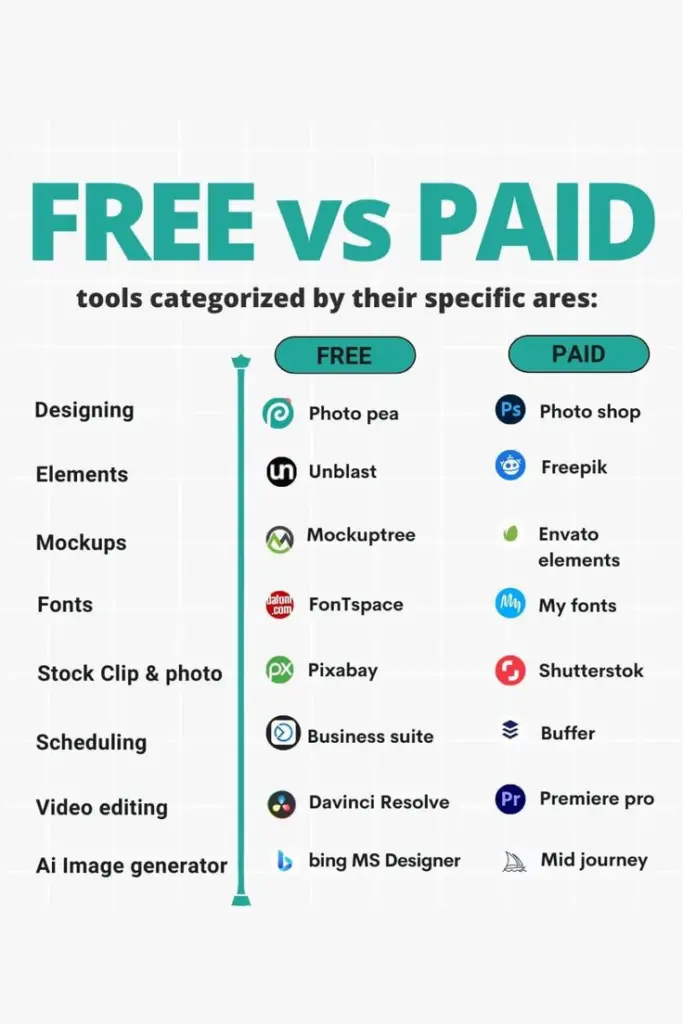
Here are some examples of tools in both categories, to illustrate the differences in practice.
Free / Freemium Tools
- Writesonic (Free Plan) – Offers some free quota (words per month), basic template / SEO features. Smart AI Directory+1
- Rytr – Good for short copy, social media, basic content. Free version has limits. rankyak.com+1
- Copy.ai (Free Tier) – Several templates; good for ad copy, short-form content. Smart AI Directory+1
- ChatGPT Free / GPT-3.5 – Useful for many general tasks; but lacks some advanced features and newest model access. Smart AI Directory+1
Paid or Premium Tools
- Jasper AI – More advanced, with brand voice control, rich templates, often better outputs. PanelsAI+1
- Writesonic Premium / Pro – More words, newer models, better SEO tools. pathtocontent.com+1
- Other tools – Premium Grammarly, premium content writing assistants with deeper features. PanelsAI
Key Trade-Offs When Choosing Between Free vs Paid
When deciding between free vs paid versions of AI tools for content writing, consider these trade-offs.
Budget vs Need
- If you write occasionally or just need short content (social media posts, captions, small blog posts), free tools may suffice.
- If you’re producing high volume, long-form content, managing a team, or needing brand consistency, paid may be worth it.
Quality vs Editing Effort
- Free outputs often need more editing, polishing, fact-checking. The time you spend editing may outweigh the money saved if the output is poor.
- Paid tools tend to reduce editing effort, providing better base drafts.
Features vs Simplicity
- Free versions tend to be simpler. For many, simplicity is good. But if you want advanced SEO features, content briefs, integrations, brand voice, etc., you’ll need paid.
Scalability & Time Savings
- Paid tools help speed up workflow, support collaboration, higher limits, and overall save more time.
- Free tool users might hit walls (limits, slow times) that slow down production or consistency.
Risk & Returns
- The money you spend on paid tools needs to justify itself via better performance, more traffic, more engagement, or saved time.
- If the ROI is low (e.g. you don’t publish often), the cost may not be justified.
Best Practices for Using AI Tools for Content Writing Free vs Paid

Regardless of which version you use, to get the best results, follow these practices:
Always Review and Edit
AI is helpful but not perfect. Check facts, refine tone, ensure coherence, remove irrelevant or incorrect content.
Tailor Prompts Well
How you ask matters. Better prompts lead to better output. Include details about tone, structure, audience.
Optimize for SEO (if needed)
Even free tools may generate content, but ensure you add or use additional tools for SEO (keyword research, meta tags, headings).
Maintain Brand Voice & Consistency
If working with a brand, you may need to standardize vocabulary, tone, style. Paid tools often help here, but you also need to manually adjust.
Use Multiple Tools / Combine Free & Paid
Sometimes using free tools for ideation, outlines, drafts, and paid tools for SEO or polishing works well.
Monitor Costs vs Benefits
If using paid tools, keep track of how much time you save, how much traffic or engagement improves, and whether the cost is justified.
When Free Tools Are Enough, and When You Should Upgrade
To decide whether you stay with free tools or switch to paid, ask yourself:
- Do I produce content often / high volume?
- Do I require high quality and minimal editing?
- Do I need advanced features: SEO, brand voice, collaboration?
- Am I working professionally or for business?
- Is the time I spend fixing free-tool output greater than the cost of upgrading?
If yes to many, a paid version makes sense. If not, free may be sufficient.
Comparison Chart: Free vs Paid AI Tools for Content Writing
| Feature / Tool | Free Plan (Highlights) | Paid Plan (Highlights) | Best For |
|---|---|---|---|
| ChatGPT (Free / Plus) | Uses GPT-3.5 model, great for brainstorming, social posts, outlines. Limited web access and slower responses. | GPT-4 model, faster, more accurate, access to file uploads, plugins, DALL·E image generation. | Writers who need conversational assistance and versatile AI generation. |
| Writesonic | Limited monthly words (~10K), access to basic templates and short-form tools. | Access to GPT-4 Turbo, unlimited words (in some plans), SEO optimization, article rewriter, brand voice. | Bloggers, marketers, and SEO writers. |
| Copy.ai | Free forever plan with limited templates and projects. | Unlimited words, team collaboration, campaign builder, API access. | Agencies and marketing teams creating ad copies. |
| Rytr | 10K characters/month, basic tones and templates. | Unlimited plan offers 40+ use cases, custom tones, team management. | Freelancers or small content creators. |
| Jasper AI | No free plan; only a short trial. | Advanced AI with brand voice, SEO mode, templates, campaign management. | Businesses and teams needing high-volume content. |
| GrammarlyGO | Basic grammar and tone suggestions. | AI writing assistant with full-sentence rewrites, tone detector, plagiarism check. | Students, editors, and content writers. |
| Simplified | Free plan includes AI writer and design tools, with daily limits. | Paid plan unlocks SEO, brand kits, and long-form content. | Social media marketers and small teams. |
| Anyword | Free plan with limited credits. | Predictive performance scoring, advanced analytics, multiple brand voices. | Ad copywriters, performance marketers. |
| Writesonic Chat (Botsonic) | Limited AI chatbot usage. | Custom-trained AI chatbot for brand or website. | Businesses adding content-based chatbots. |
Quick Summary
- Free Tools → Great for beginners, casual creators, students, or freelancers testing AI writing.
- Paid Tools → Ideal for agencies, startups, marketers, and professionals producing large volumes of SEO or branded content.
Tips Before You Choose
- Test Multiple Free Plans – Before paying, try free versions of 2–3 platforms to see which tone and accuracy fit your needs.
- Focus on ROI – If upgrading saves time or improves conversions, the paid plan is worth it.
- Mind the Data Policy – Check if free tools use your data to train models. Paid tools often offer better privacy.
- Watch for Hidden Costs – Some tools charge for word extensions, SEO add-ons, or premium templates.
- Combine Tools Smartly – Example: Use ChatGPT (Free) for ideas, Grammarly Free for edits, and Jasper (Paid) for SEO final drafts.
Final Verdict
Choosing between free vs paid AI tools for content writing depends on your scale and goals:
- For beginners → Start with ChatGPT Free or Rytr.
- For marketers → Try Writesonic or Copy.ai Pro.
- For agencies or brands → Jasper AI or Anyword Pro is worth every penny.
FAQs about AI Tools for Content Writing Free vs Paid
Here are some frequently asked questions that may help clarify:
Q1. Are free AI tools safe for SEO / website content?
A: Yes, but with caution. Free tools might produce weaker keyword integration, generic content, or even duplicate content. Always optimize, edit, and check plagiarism. Paid tools often provide better SEO integrations and checks.
Q2. Will paid AI tools completely eliminate the need for human writers?
A: Not entirely. Even with paid tools, human editing, ideation, fact-checking, and creative voice are essential. AI is more of a helper than a full replacement.
Q3. Can I start with free and upgrade later?
A: Absolutely. Many writers and small teams do this. Use free tools to test workflows, choose features you need, then shift to a paid plan when volume or quality demands increase.
Q4. Does paying necessarily mean better content?
A: Not always. While paid tools give more features and better models, how you use them (your prompts, editing) matters a lot. A well-used free tool might outperform a poorly used paid one.
Q5. Is there a risk in free AI tools regarding privacy or data usage?
A: Yes. Free tools may have less robust privacy policies; inputs might be used to train models; data retention or deletion policies may not be as strong. Paid tools often offer better control over data and usage.
Summary & Conclusion
In summary, the choice between AI tools for content writing free vs paid boils down to what you need, how often you write, how much quality you expect, and how much time you want to invest.
- Free versions are excellent for getting started, small‐scale writing, ideation, experimentation.
- Paid tools are more suitable for scaling, ensuring higher quality, SEO optimization, brand consistency, team workflows, and reduced editing time.
If I were you, I’d start with a free tool, really test it: see how quality, voice, speed, SEO match your expectations. Then upgrade when you hit consistent limitations—whether that’s word caps, low output quality, or missing features.

Your article helped me a lot, is there any more related content? Thanks! https://www.binance.info/ph/register?ref=IU36GZC4