AI in HR: Recruitment Automation – 7 Powerful Ways to Supercharge Your Hiring Success
Discover 7 powerful ways AI in HR: Recruitment Automation is transforming hiring with smarter sourcing, faster screening, and better candidate experiences.
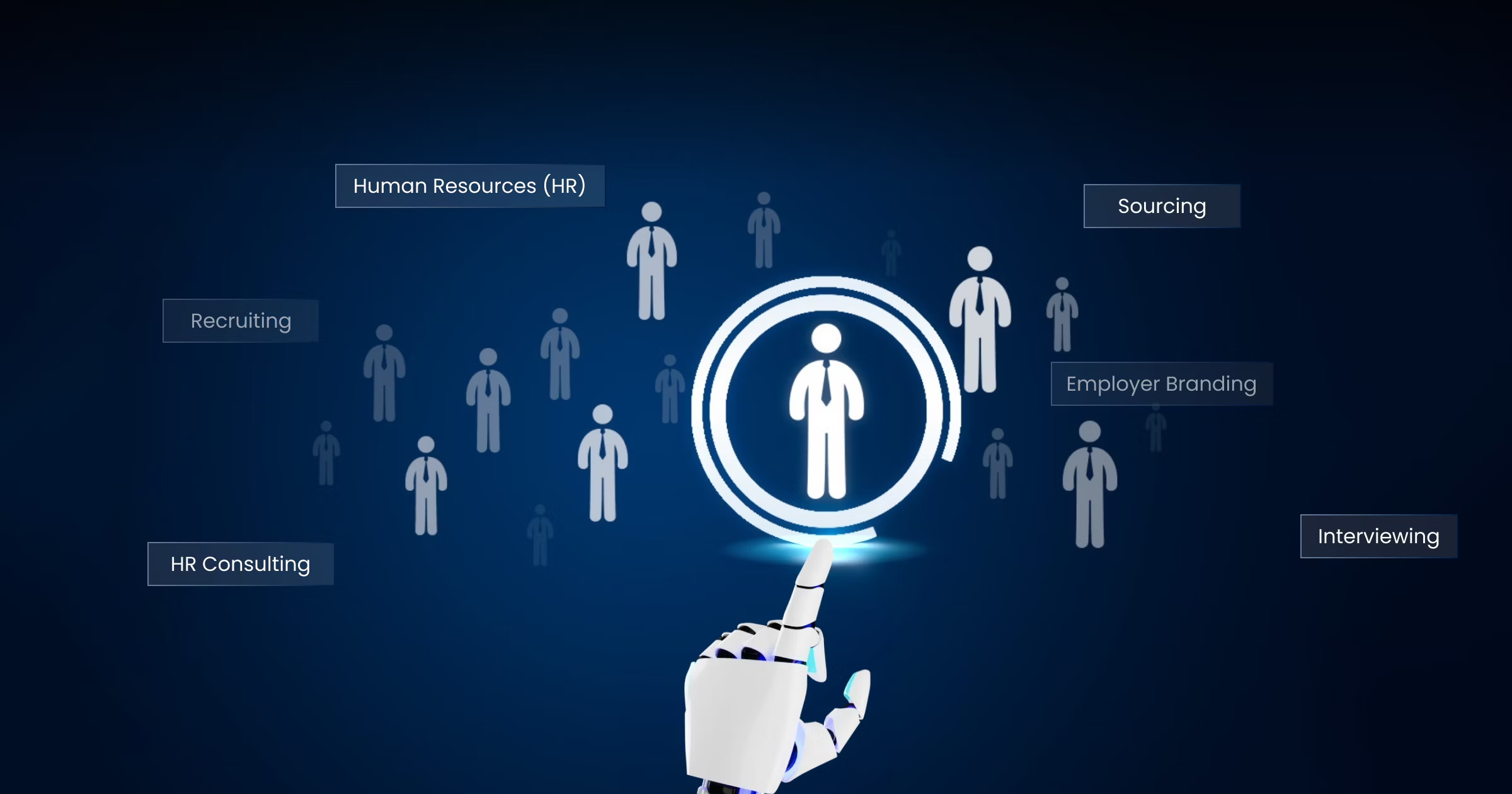
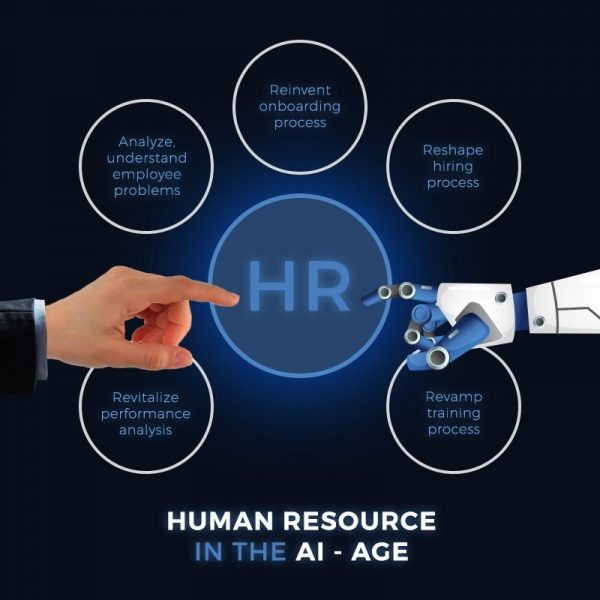
AI in HR: Recruitment Automation is transforming how businesses attract, evaluate, and hire top talent. From sourcing to onboarding, Artificial Intelligence is optimizing every stage of the recruitment process. Companies adopting AI are not only saving time but also improving quality of hire, reducing bias, and enhancing the overall candidate experience.
In this article, we’ll explore seven powerful ways AI in HR: Recruitment Automation is reshaping the modern hiring landscape, along with practical steps, best practices, and useful resources.
1. AI in HR: Recruitment Automation Streamlines Candidate Sourcing
AI-powered recruitment platforms automatically search multiple databases and job boards to identify suitable candidates based on predefined criteria.
They analyze profiles, detect patterns, and even recommend passive candidates who match your job description — saving recruiters hours of manual effort.
👉 Learn more about how AI is revolutionizing talent sourcing on LinkedIn Talent Blog (DoFollow).
2. Faster Resume Screening and Shortlisting
Recruiters often spend up to 60% of their time manually screening resumes. With AI in HR: Recruitment Automation, machine learning algorithms quickly extract relevant skills, education, and experience.
These systems rank candidates based on job fit, ensuring that recruiters spend more time interviewing high-potential applicants rather than sorting resumes.
Internal link: Check out our guide on AI Interview Software for HR Teams to integrate screening with video analysis.
3. Enhancing Candidate Communication with AI Chatbots
AI chatbots engage with applicants 24/7 — answering FAQs, confirming application status, and scheduling interviews automatically.
This not only enhances candidate satisfaction but also strengthens your employer brand. A responsive, AI-driven hiring experience leaves a lasting positive impression.
External Resource (DoFollow): Read about candidate experience trends on SHRM.org.
4. Intelligent Interview Scheduling
Manual scheduling is a major bottleneck in hiring. AI tools integrate with recruiter calendars and automatically suggest optimal time slots for interviews, send reminders, and reschedule if needed — all without human intervention.
This level of automation drastically reduces delays and eliminates communication errors.
5. Predictive Analytics for Better Hiring Decisions
Predictive AI models assess candidates based on historical hiring data and performance outcomes.
For example, they can identify which candidates are more likely to succeed or stay long-term based on previous employee data.
This data-driven approach makes hiring more accurate and minimizes turnover.
External Link (DoFollow): Dive into data-based hiring insights from Harvard Business Review.
6. Bias Reduction and Fair Hiring
While humans can be unconsciously biased, AI in HR: Recruitment Automation focuses on structured data and objective assessment metrics.
When properly designed, AI can minimize bias by masking demographic information and standardizing evaluation processes.
However, ethical AI usage requires ongoing monitoring and bias audits to ensure fairness.
7. Automated Onboarding and Candidate Retention
Automation doesn’t stop at hiring — AI assists in onboarding too.
Once a candidate accepts an offer, AI systems automatically send onboarding emails, assign training modules, and monitor completion progress.
This seamless onboarding boosts retention by making new hires feel engaged from day one.
Benefits of AI in HR: Recruitment Automation
• Time and Cost Efficiency
Automation significantly cuts down repetitive tasks, freeing HR teams to focus on strategic goals.
• Improved Candidate Experience
Personalized and timely communication makes applicants feel valued, enhancing employer branding.
• Data-Driven Hiring
AI-driven analytics bring accuracy and consistency to every hiring decision.
• Scalability
AI tools scale effortlessly for mass recruitment or global hiring drives.
Common Challenges and How to Overcome Them

1. Data Privacy
Always comply with GDPR and local data protection laws when handling candidate information.
2. Biased Data
Train models on diverse and representative datasets to reduce algorithmic bias.
3. Integration Costs
Start small — pilot automation for one part of the process before a full rollout.
Best Practices for Implementing AI Recruitment Automation
- Keep human oversight in every stage.
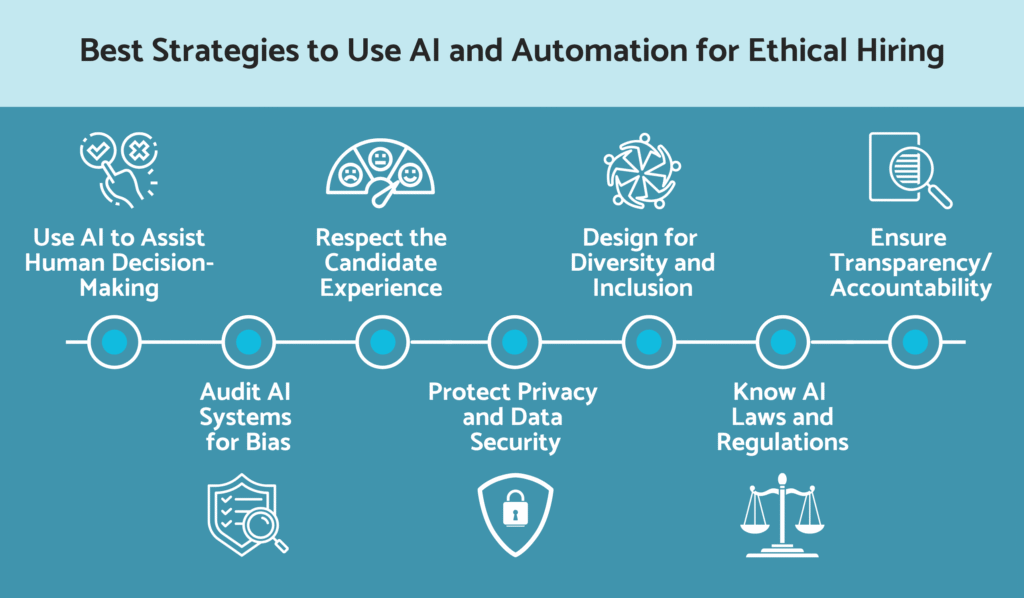
- Train your HR team to interpret AI outputs correctly.
- Conduct regular bias audits.
- Prioritize candidate transparency — let them know when AI is used.
- Integrate AI with your ATS for smoother data flow.
Real-Life Example
Global companies like Unilever and IBM have successfully adopted AI in HR: Recruitment Automation to streamline their hiring processes.
Unilever, for example, reported saving thousands of recruiting hours annually by using AI-driven video interviews and predictive analytics.
Read more success stories at Forbes – AI in Hiring (DoFollow).
Frequently Asked Questions (FAQ)
1. What is AI in HR: Recruitment Automation?
It’s the integration of Artificial Intelligence into HR hiring workflows — automating resume screening, sourcing, scheduling, and onboarding.
2. How does it help recruiters?
It saves time, reduces bias, improves hiring quality, and ensures a consistent candidate experience.
3. Will AI replace recruiters?
No — AI supports recruiters by handling repetitive tasks while humans focus on empathy, communication, and final decisions.
4. Is it expensive to implement?
Costs vary. Cloud-based AI hiring tools are affordable for small to medium businesses and scale with need.
5. What’s next for AI in HR?
The future includes predictive analytics, generative AI for job ads, and transparent, ethical recruitment systems.
Conclusion
The adoption of AI in HR: Recruitment Automation is no longer optional — it’s the competitive edge every business needs.
By automating repetitive tasks, improving decision accuracy, and enhancing candidate experiences, AI empowers HR departments to focus on what truly matters — building great teams.
Implement it responsibly, maintain human oversight, and watch your recruitment efficiency skyrocket.
Thanks for sharing. I read many of your blog posts, cool, your blog is very good. https://accounts.binance.info/tr/register?ref=MST5ZREF
Your point of view caught my eye and was very interesting. Thanks. I have a question for you.
Can you be more specific about the content of your article? After reading it, I still have some doubts. Hope you can help me.