Web3 for Beginners Guide — The Ultimate Starter Manual for 2025
Dive into the Web3 for Beginners Guide and learn how blockchain, crypto, NFTs, and decentralized apps are shaping the internet’s future. Start your Web3 journey with practical steps and trusted tools.
The internet is evolving rapidly, and Web3 is at the heart of this transformation. If you’ve ever wondered how blockchain, cryptocurrencies, NFTs, and decentralized platforms work together — this Web3 for Beginners Guide is for you.
In this guide, we’ll walk you through the basics, tools, and strategies to navigate Web3 confidently, even if you have no prior experience with crypto or coding.
What Is Web3?

At its core, Web3 represents the next generation of the internet — decentralized, transparent, and user-controlled. Unlike Web2, where big tech platforms control your data, Web3 empowers individuals to own and control their digital assets using blockchain technology.
👉 According to CoinDesk, Web3 focuses on privacy, ownership, and peer-to-peer interactions without intermediaries.
Web3 vs Web2 — The Key Differences

| Feature | Web2 | Web3 |
|---|---|---|
| Ownership | Controlled by corporations | Owned by users |
| Data Storage | Centralized servers | Decentralized blockchain |
| Identity | Platform-based logins | Wallet-based identities |
| Monetization | Ad-driven | Token-driven |
| Interactions | Through intermediaries | Peer-to-peer |
Web3 eliminates the need for third parties, giving users control over how their data, identity, and assets are used.
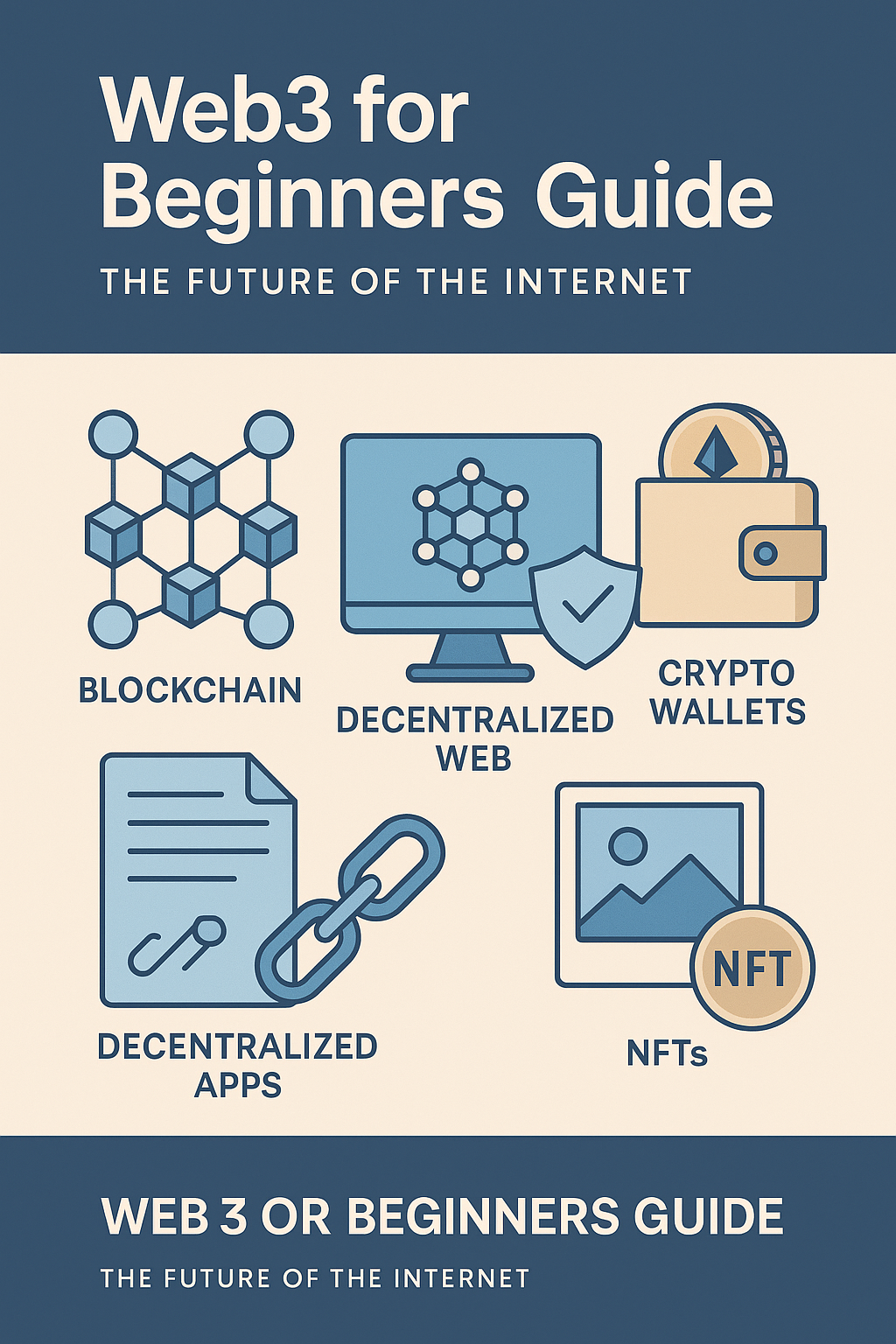
Key Components of Web3

Blockchain Technology
The foundation of Web3 is the blockchain — a distributed ledger that records transactions securely and transparently. Every transaction is verified by multiple nodes, ensuring trust without central authority.
Smart Contracts
Smart contracts are automated, self-executing agreements written in code. They enable trustless interactions and power decentralized applications (DApps) on platforms like Ethereum, Solana, and Polygon.
Cryptocurrencies
Web3’s economy runs on cryptocurrencies such as Bitcoin, Ethereum, and Polygon (MATIC). These digital currencies facilitate peer-to-peer transactions without traditional banks.
Decentralized Applications (DApps)
DApps operate on blockchain networks. Examples include Uniswap (for trading tokens), OpenSea (for NFTs), and Aave (for lending crypto).
Non-Fungible Tokens (NFTs)
NFTs represent ownership of unique digital items — from art to virtual real estate. They’re transforming industries like gaming, art, and media.
Top 10 Steps in the Web3 for Beginners Guide

Step 1: Learn the Basics of Blockchain
Start by understanding how blockchains store and verify transactions. Free resources like Ethereum.org and YouTube tutorials are great starting points.
Step 2: Understand Wallets and Keys
Your crypto wallet (like MetaMask, Trust Wallet, or Phantom) stores your assets.
- Public Key: Your wallet address (shareable).
- Private Key: Your access password (never share it).
Step 3: Explore Decentralized Finance (DeFi)
DeFi platforms let users lend, borrow, and trade without banks. Popular options include Aave, Compound, and Uniswap.
Step 4: Start with Simple DApps
Try small transactions on apps like Mirror.xyz for writing or Zapper to manage your crypto portfolio.
Step 5: Discover NFTs and Digital Ownership
Create your first NFT using tools like OpenSea or Rarible. Even if you’re not an artist, understanding NFT marketplaces will help you explore digital ownership.
Step 6: Join a Web3 Community
Communities like Discord’s Web3 channels and Twitter Web3 spaces help beginners learn, share, and collaborate.
Step 7: Learn About DAOs (Decentralized Autonomous Organizations)
DAOs are blockchain-based organizations that operate democratically through token-based voting. Explore projects like Aragon and DAOstack.
Step 8: Practice Safe Crypto Habits
Always double-check wallet addresses, avoid suspicious links, and use hardware wallets for large assets.
Step 9: Experiment with Web3 Tools
Tools like IPFS (InterPlanetary File System) and ENS (Ethereum Name Service) enhance your decentralized experience.
Step 10: Stay Updated with Web3 News
Follow reputable sites like CoinTelegraph and Decrypt for real-time updates on Web3 developments.
Benefits of Web3 for Users and Businesses
- Ownership & Control: You own your data and assets.
- Transparency: All transactions are recorded on-chain.
- No Middlemen: Direct user-to-user transactions.
- Monetization: Content creators earn directly through tokens or NFTs.
- Global Access: Web3 tools are borderless and open-source.
Internal Link: Read our guide on AI and IoT Smart Home Gadgets to see how decentralized tech integrates with AI innovations.
Challenges and Limitations
While promising, Web3 faces hurdles:
- Scalability Issues: Slow transactions in some blockchains.
- Complex User Experience: Wallets and crypto terms can be confusing.
- Regulatory Uncertainty: Governments are still defining crypto laws.
- Security Risks: Hacks and scams are prevalent if users aren’t careful.
The Future of Web3 in 2025 and Beyond
As Web3 matures, expect:
- Integration with AI and machine learning for smarter DApps.
- Wider corporate adoption by major tech companies.
- Growth of Metaverse ecosystems powered by Web3 tokens.
- More eco-friendly blockchains reducing energy use.
Experts predict that by 2030, Web3 could redefine online identity, ownership, and the creator economy entirely.
FAQs — Web3 for Beginners Guide
Q1: Is Web3 the same as cryptocurrency?
No, Web3 is broader. Cryptocurrencies are a part of Web3, but the ecosystem also includes DApps, NFTs, DAOs, and decentralized storage.
Q2: Do I need coding skills to get started with Web3?
Not necessarily. Many tools and wallets offer beginner-friendly interfaces that don’t require coding knowledge.
Q3: How do I invest safely in Web3 projects?
Research thoroughly, use trusted exchanges, and never share private keys. Always verify project authenticity before investing.
Q4: What are some good Web3 projects to explore in 2025?
Popular Web3 projects include Ethereum, Polygon, Chainlink, Aave, and Decentraland.
Q5: Is Web3 only for tech enthusiasts?
No! Web3 empowers anyone — from artists and gamers to entrepreneurs — to participate in a decentralized digital economy.
Final Thoughts
The Web3 for Beginners Guide empowers you to explore the decentralized internet confidently. Whether you’re creating NFTs, joining DAOs, or using DApps, the future of the web lies in transparency, control, and innovation.
Embrace this revolution early, and you’ll be part of the digital transformation reshaping the world.
I don’t think the title of your article matches the content lol. Just kidding, mainly because I had some doubts after reading the article. https://www.binance.com/bg/register?ref=V2H9AFPY